When you're diving into an audio project, one thing you definitely don’t want to overlook is the Audio Inductor. It’s a small but mighty component that really shapes your sound by filtering out unwanted frequencies and giving your audio that crisp, clear quality. Picking the right one can make a huge difference—not just for how your gear performs, but also for how you experience the music or sound in the end. With so many options out there, it’s super important to understand what each type of Audio Inductor does and when to use it.
In this guide, I’ll walk you through the main things to keep in mind when choosing an Audio Inductor. Stuff like inductance value, current rating, and size — they all play a part in how well the inductor works in your circuit. Whether you’re building a high-end speaker system or customizing an amplifier, knowing how to evaluate these factors will help you make smarter choices. Digging into the details of Audio Inductors can really level up your projects, making sure your sound is as clear, rich, and immersive as it should be.
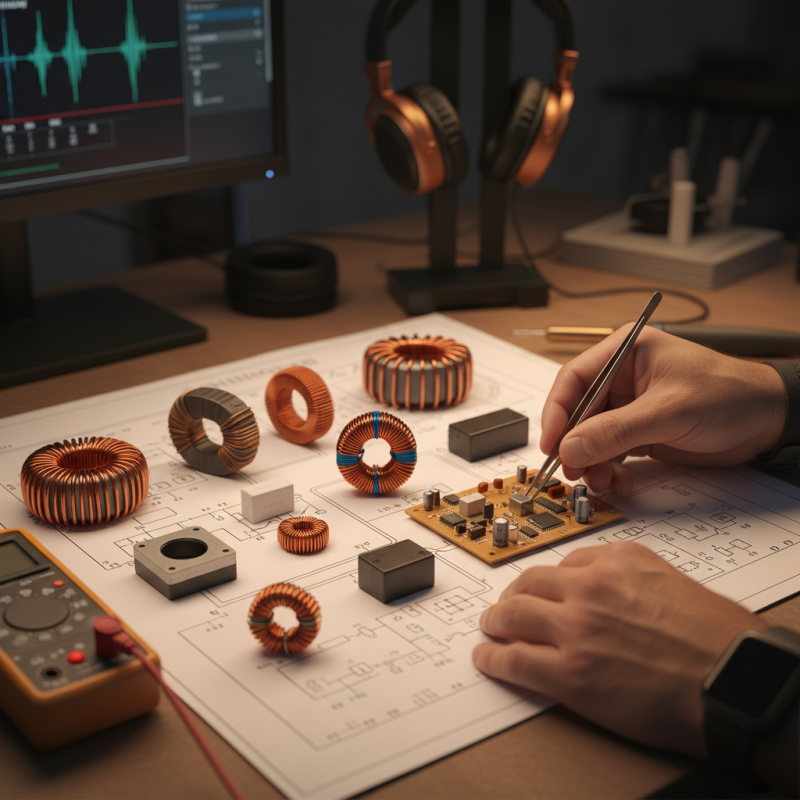
Understanding the Basics of Audio Inductors for Projects
When diving into audio projects, understanding the basics of Audio Inductors is essential for achieving optimal sound quality. An Audio Inductor, often referred to as a coil or choke, serves to control the flow of alternating current in audio circuits. By resisting changes in current, inductors smooth out the audio signal, thereby minimizing distortion and enhancing clarity. It’s important to familiarize yourself with the various types of inductors, such as fixed and variable inductors, and their respective roles within different audio applications.
In practical terms, choosing the right inductor involves considering parameters like inductance value, current rating, and resistance. The inductance value directly impacts how well the component will perform in your specific audio setup—higher values generally offer better low-frequency response, while lower values may excel in high-frequency applications. Additionally, the inductor's current rating should align with the demands of your circuit to avoid overheating and component failure. Understanding these fundamentals will equip you with the knowledge necessary to select an inductor that complements your audio project, ensuring the best possible sound experience.
Audio Inductor Selection for Projects
This chart represents the inductance values (in microhenries) of various types of Audio Inductors commonly used in audio projects. The data highlights the characteristics of different inductors based on their frequency response.
Types of Audio Inductors and Their Applications
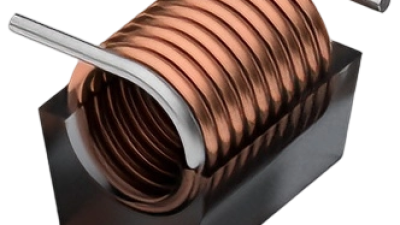
When selecting the appropriate Audio Inductor for your projects, understanding the various types available and their specific applications is crucial. Audio Inductors come primarily in two categories:air-core and iron-Core Inductors. Air-Core Inductors are known for theirlow distortion and high-frequency performance. They are ideal for high-fidelity audio applications where clarity and detail are paramount, making them a popular choice in high-end speaker systems. Their design minimizes losses, but they are typically larger and may require more space in the circuit.
On the other hand, iron-Core Inductors provide higher inductance in a smaller physical size, making them suitable for applications that demand compact designs, such as portable audio devices or amplifiers. These inductors can handle higher currents and are often used in crossover networks within loudspeakers, allowing for effective separation of audio frequencies. However, they may introduce some distortion, which can be a consideration for audiophiles seeking pure sound reproduction.
Understanding these distinctions will help you choose the right inductor to achieve the desired audio quality for your projects.
Key Specifications to Consider When Choosing an Inductor
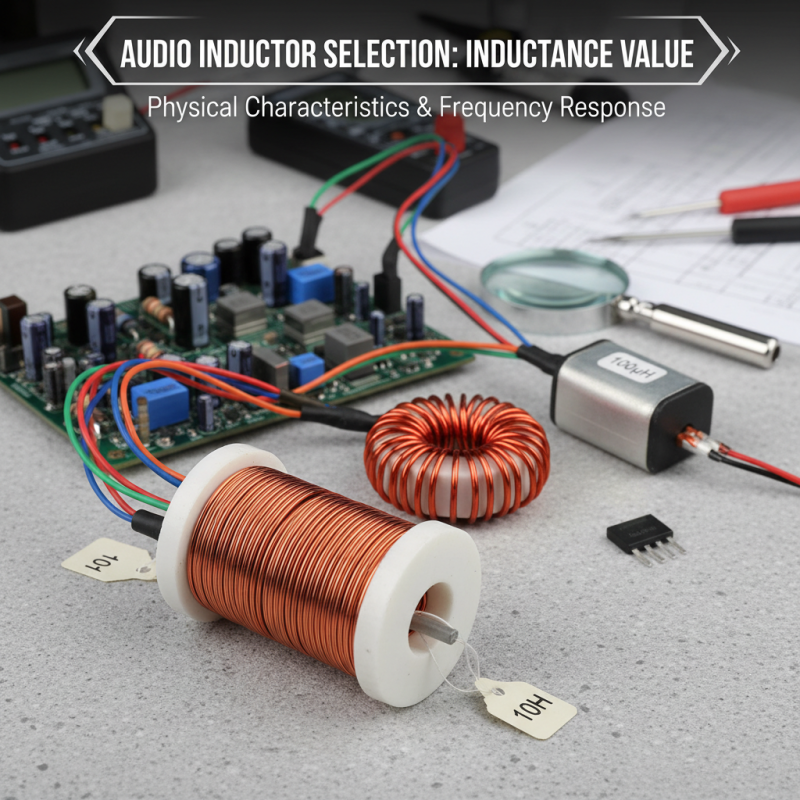
When selecting the right Audio Inductor for your audio projects, it’s crucial to consider several key specifications that can impact the performance of your design. First, pay attention to the inductance value, typically measured in henries (H). This value determines how well the inductor can store energy in a magnetic field and greatly affects the frequency response of your audio circuit. A higher inductance can lead to a smoother response at lower frequencies, while a lower value may be better suited for higher frequencies.
Another important specification is the current rating, or saturation current, which indicates the maximum current the inductor can handle before its inductance begins to decrease. It’s essential to choose an inductor that can easily accommodate the peak current in your application for optimal performance and reliability. Additionally, consider the inductor's resistance, as lower resistance can minimize power losses and improve efficiency in your audio project.
Tips: When selecting an inductor, always review the physical size and form factor, as this can significantly influence your circuit layout. It's also beneficial to evaluate the quality factor (Q), which reflects how well the inductor can perform at its resonant frequency. A high Q value typically indicates better efficiency, making it a desirable trait in audio applications.
Evaluating Inductor Quality and Performance Parameters
When selecting the right audio inductor for your audio projects, evaluating the quality and performance parameters is crucial for optimal sound reproduction. Key performance metrics to consider include inductance value, resistance, saturation current, and core material. The inductance value, typically measured in henries (H), directly affects the response characteristics of the audio signal. For instance, inductors with higher inductance values tend to better filter lower frequencies, which is essential for high-fidelity audio applications.
Moreover, the equivalent series resistance (ESR) can significantly impact both thermal performance and signal quality. A lower ESR ensures minimal energy loss in the form of heat, contributing to more efficient power handling. According to industry reports from the Audio Engineering Society, inductors with an ESR below 0.1 ohms are recommended for high-performance audio applications to maintain signal integrity. Saturation current is another critical parameter; exceeding this limit can lead to distortion and reduced performance. Current ratings for audio inductors typically range from 1A to 10A, with higher ratings benefiting applications requiring greater power.
Core material also plays a significant role in overall performance. Ferrite cores are popular due to their magnetic properties that enhance inductive performance while minimizing unwanted noise. A study published in the IEEE Transactions on Audio and Sound Engineering indicates that properly designed ferrite inductors can deliver a reduction in audio distortion of up to 20%, proving their effectiveness in high-end audio systems. By thoroughly evaluating these performance parameters, you can ensure that the chosen inductor will meet the demands of your specific audio project.
The Role of Inductance Value in Audio Signal Processing
Inductance value plays a crucial role in audio signal processing, particularly in designing effective audio inductors for various audio projects. The inductance determines how an inductor responds to alternating current (AC) signals, which is essential for filtering and shaping audio frequencies. A higher inductance value typically allows for better control over low-frequency signals, making it ideal for applications such as low-pass filters, where the goal is to permit lower frequencies to pass while attenuating higher ones. This characteristic is particularly important in audio applications that require a rich, warm sound quality.
On the other hand, selecting an inductor with an appropriate inductance value is also critical in ensuring that mid and high frequency signals are not adversely affected. If the inductance is too high, it risks diminishing sound clarity and introducing unwanted distortion in the higher frequency range. Therefore, careful consideration of both the inductance value and the specific requirements of the audio circuit is imperative. By properly matching these parameters, designers can achieve a well-balanced audio signal that enhances overall performance, ensuring that each frequency range is accurately represented in the output sound.
Tips for Sourcing and Selecting the Right Inductor for Your Needs
When sourcing and selecting the right audio inductor for your projects, begin by clearly defining your specific requirements. Consider factors such as inductance value, current rating, and physical dimensions. Understanding the context in which the inductor will be used—in terms of frequency range and signal type—is essential for making an informed choice. Researching the electrical characteristics of potential inductors will help ensure that they meet your performance expectations and contribute positively to your audio circuit's functionality.
Another important aspect is the sourcing process itself. Look for reputable suppliers who specialize in electronic components, as they can offer a wide variety of inductors suitable for audio applications. Pay attention to documentation, such as datasheets, which provide invaluable information regarding the inductor specifications, including tolerances and quality ratings. Engaging with experienced engineers or communities can also yield insights and recommendations, guiding you towards making the best selection for your audio needs and ensuring the longevity and reliability of your project.
Common Mistakes to Avoid When Choosing Audio Inductors
When selecting audio inductors for your projects, avoiding common pitfalls is crucial to achieving optimal performance. One frequent mistake is overlooking the inductor's saturation current rating. Exceeding this rating can lead to distortion and degraded sound quality. Always ensure that the inductor you choose can handle the maximum current expected in your application.
Another common error is neglecting the inductor's DC resistance (DCR). Higher DCR can introduce unwanted resistance, reducing the efficiency of your audio circuit and affecting overall sound fidelity. It's important to strike a balance between inductance value and DCR to ensure both performance and efficiency.
**Tips:**
When specifying inductors, pay attention to the core material. Different materials can impact the inductance and performance characteristics, especially at higher frequencies. A suitable core material can help minimize losses and optimize sound quality.
Additionally, consider the physical size of the inductor. Larger inductors may provide better performance, but they also require more space and can be heavier, impacting your project's overall design. Ensure that the inductor fits well within your layout without compromising other components.
How to Choose the Right Audio Inductor for Your Audio Projects - Common Mistakes to Avoid When Choosing Audio Inductors
| Inductor Type | Inductance Value (µH) | Current Rating (A) | DC Resistance (Ω) | Application |
| Air Core | 10 | 0.5 | 0.05 | Low-Frequency Filters |
| Iron Core | 22 | 1 | 0.2 | Mid-Frequency Applications |
| Toroidal | 47 | 2.5 | 0.1 | High-Fidelity Audio |
| Ferrite Core | 33 | 1.5 | 0.15 | Decoupling Capacitor |
Enhancing Circuit Performance: The Role of SMTAM3618 Ferrite SMD Inductors in Noise Suppression
In the realm of modern electronics, noise suppression is critical for enhancing circuit performance, especially in high-frequency applications. The SMTAM3618 Ferrite SMD Inductor is engineered to address this need effectively. Offering a miniature scale with a maximum Q factor, these inductors are designed to optimize circuit design while maintaining affordability. Their high-performance characteristics enable seamless integration into diverse electronic devices, making them an ideal choice for minimizing unwanted noise interference.
Moreover, the SMTAM3618 model boasts impressive features that cater to the demands of contemporary technology. Its RoHS compliance ensures it meets stringent environmental standards, thus appealing to manufacturers focused on sustainability. The ability to rapidly bond and low sensitivity to humidity makes these inductors suitable for a variety of applications, including digital TV tuners, mobile phones, and wireless communication devices. By employing these inductors, engineers can enhance the reliability and overall performance of their designs, paving the way for innovation in the ever-evolving landscape of consumer electronics.
FAQS
: The main types of audio inductors are air-core inductors and iron-core inductors. Air-core inductors are known for low distortion and high-frequency performance, while iron-core inductors offer higher inductance in a smaller size.
Air-core inductors are ideal for high-fidelity audio applications where clarity and detail are important, such as in high-end speaker systems.
Iron-core inductors provide higher inductance in a compact design, making them suitable for applications that require smaller sizes, like portable audio devices or amplifiers.
The inductance value, measured in henries (H), affects how well the inductor stores energy in a magnetic field and influences the frequency response of your audio circuit.
The current rating indicates the maximum current the inductor can handle before its inductance decreases. Choosing an inductor that accommodates peak current is essential for optimal performance and reliability.
Lower resistance minimizes power losses and improves the efficiency of the audio project, while higher resistance can reduce sound fidelity.
The physical size and form factor can influence the circuit layout significantly, impacting how well the components fit and function together.
The quality factor (Q) indicates how efficiently the inductor performs at its resonant frequency. A high Q value is desirable as it reflects better efficiency in audio applications.
Avoid overlooking the saturation current rating, neglecting the DC resistance (DCR), and failing to consider the core material and physical size of the inductor, as these factors can affect performance and sound quality.
Different core materials can influence the inductance and performance characteristics, especially at higher frequencies, and a suitable material can help minimize losses for better sound quality.
Conclusion
Choosing the right audio inductor is crucial for the success of your audio projects. This involves understanding the fundamentals of audio inductors, which come in various types, each serving specific applications. When selecting an audio inductor, key specifications such as inductance value, quality, and performance parameters must be evaluated carefully to ensure optimal audio signal processing.
Additionally, it is important to recognize common mistakes that can occur during the selection process, such as overlooking the role of inductance value or not sourcing high-quality inductors. By adhering to the outlined tips for sourcing and selecting the right audio inductor, you can enhance the performance of your audio equipment and ensure the best possible auditory experience.

 +86-15916242887
 CONTACT US